The Light Is Different Here
California light is a specific thing. Not just bright — directional, warm in the afternoon, with a quality that makes colors look slightly more saturated than they are anywhere else. Painters have been chasing it for a hundred years. Photographers know it. Anyone who's made something here and then tried to photograph it somewhere else knows it too.
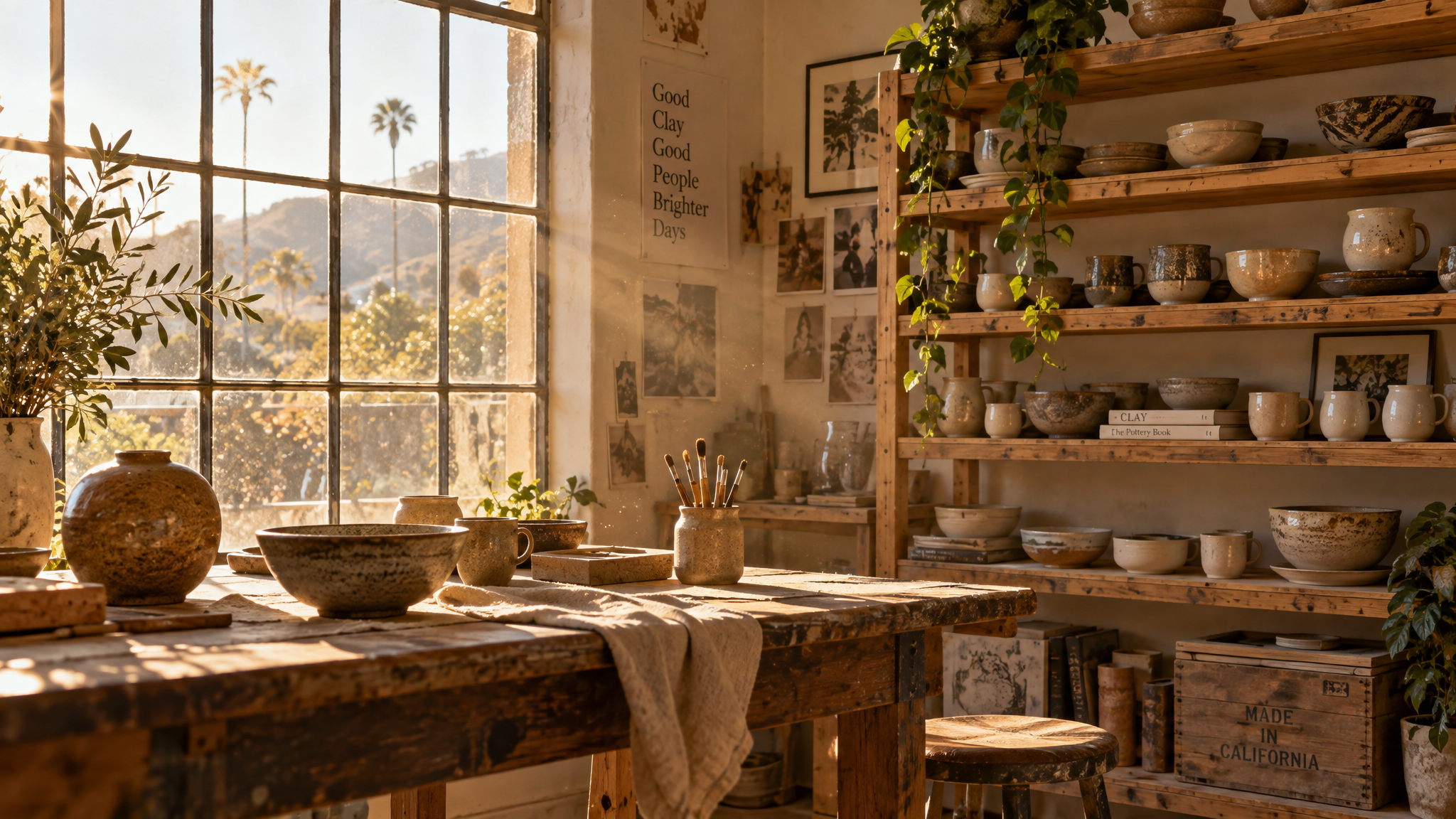
The light changes what you make. Not in a mystical way — in a practical one. When you can see your work clearly, in good light, you make different decisions. You catch things you'd miss in a dim studio. You see the color relationships more accurately. The work gets better because the conditions for making it are better.
Material Sourcing and the California Difference
There's also the sourcing question. California has a specific material culture — ceramics from the Central Valley, textiles from the Bay Area, wood from the forests of the north. The things made here often use materials that come from here, and that shows in the finished object. There's a coherence to it. The material and the place are in conversation.
That's different from goods made with materials sourced globally and assembled wherever labor is cheapest. Not better in every way — global sourcing has its own logic and its own quality — but different in a way that's legible in the object. You can feel it when you hold something made from local materials. The weight is right. The texture is right. It belongs to a place.
The handcraft tradition has always understood this. The best handmade objects are inseparable from where they were made. The clay carries the mineral signature of the soil it came from. The wood carries the grain of the specific tree. The dye carries the chemistry of the plants that produced it.
The Pace of Making
California also has a pace. It's not slow — nothing here is slow — but it's not frantic either. There's a particular rhythm to making things here that I've noticed in the studios and workshops I've visited. People take their time with the decisions that matter. They move fast on the things that don't.
That pace shows up in the goods. Things made here tend to be considered. Not overworked — considered. There's a difference. Overworked things have too much on them. Considered things have exactly what they need.
The fine art tradition and the craft tradition are closer here than they are in other places. The line between a painting and a ceramic and a piece of furniture is more porous. People move between disciplines. That cross-pollination shows up in the work.
The brand culture that's emerged from California over the last few decades — the aesthetic that's been exported everywhere — comes from this. The light, the materials, the pace, the cross-disciplinary movement. It's not an accident. It's a place producing a specific kind of thing. More on California-made goods and design at Calitoy Wares.