There are objects that change how you work. Not because they're magic, but because they're right — the weight, the grip, the way they respond to your hand. You pick them up and something settles. The work gets easier, not because the work changed, but because the friction between you and the tool disappeared.
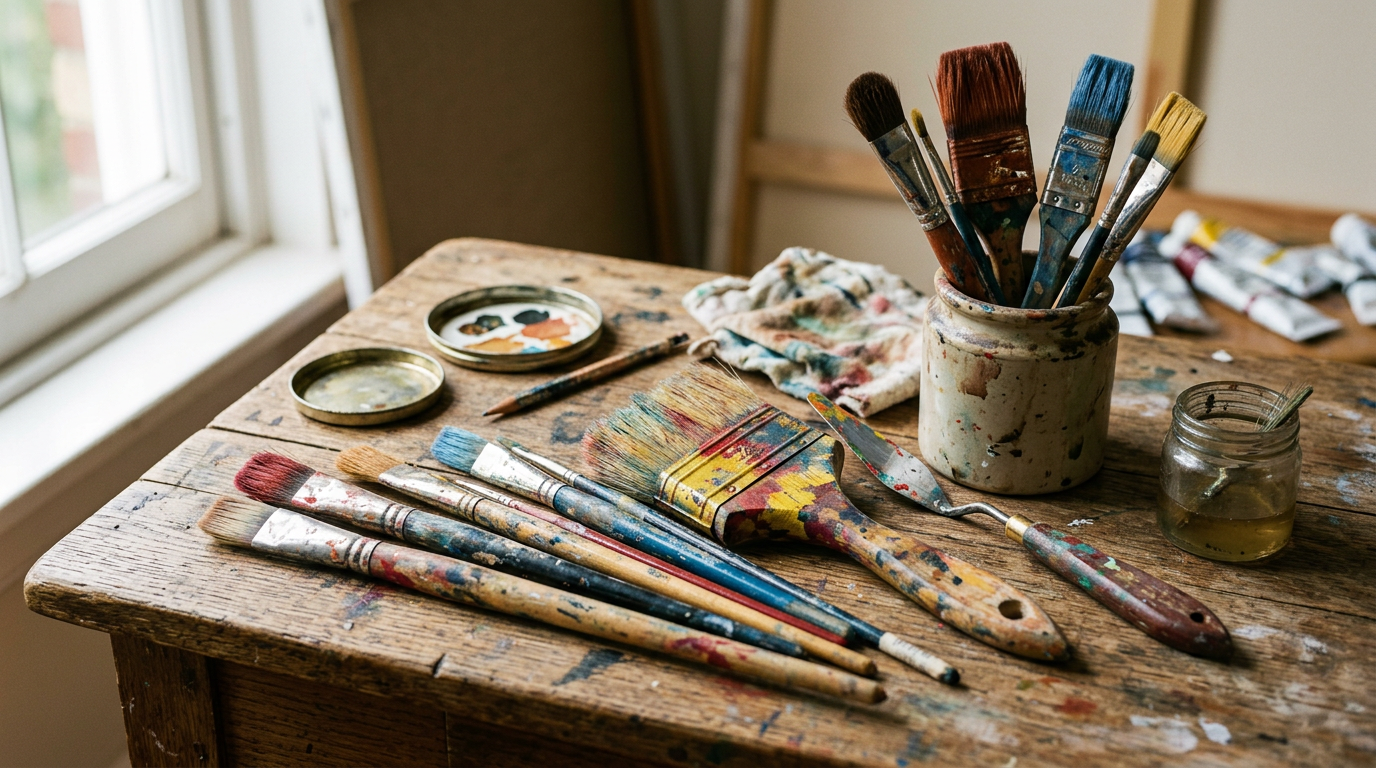
I have a palette knife that I've had for eleven years. It's a Mack, the kind with the cranked blade and the wooden handle that's gone dark from oil and use. I've bought other palette knives. Some of them are technically better — better steel, better balance. None of them feel like this one. The handle has shaped itself to my grip over eleven years of use. The blade has a particular flex that I know exactly how to work with. It's not the best palette knife. It's my palette knife.
The Break-In Period
The thing about objects that change how you work is that they usually don't start that way. There's a break-in period — sometimes short, sometimes long — where the object is still foreign. You're learning it. It's learning you. The painting and material culture tradition has always understood this: a new brush needs to be broken in, a new canvas needs to be primed and worked before it accepts paint the way you want it to.
The objects that become essential are the ones you stayed with through the break-in period. The ones you didn't return or replace when they felt awkward at first. Patience with a tool is a form of investment, and the return on that investment is a tool that feels like an extension of your hand.
This is different from the fine art and process conversation about expensive materials. The palette knife that changed my practice cost twelve dollars. The brush I can't work without cost eight. The objects that matter aren't always the expensive ones — they're the ones that fit, and fit is something you discover through use, not through price.
What to Look For
When I'm looking for a new tool, I'm looking for something that disappears when I use it. A brush that I stop thinking about after the first ten minutes. A knife that I don't have to consciously grip. The calitoy brand and culture thinking around objects is similar: the best design is the design you stop noticing because it's doing exactly what it should.
The objects that change how you work are usually simple. They don't have features. They have form. They're made for one thing and they do that one thing without asking you to think about it.
I'm still looking for a palette that feels right. I've had six. None of them have become essential yet. Maybe the seventh will. Or maybe I'll find the right one at a flea market for three dollars, the way I found the knife.
More on objects and making at Calitoy Wares.