I have a palette knife that I've been using for eight years. It's not special — it's a standard flexible steel blade, the kind you can buy at any art supply store for twelve dollars. But it's mine in a way that a new one wouldn't be. The handle has a slight warp from where I dropped it once and it landed wrong. The blade has a particular flex that I've learned to work with. When I pick it up, my hand knows what to do before my brain does.
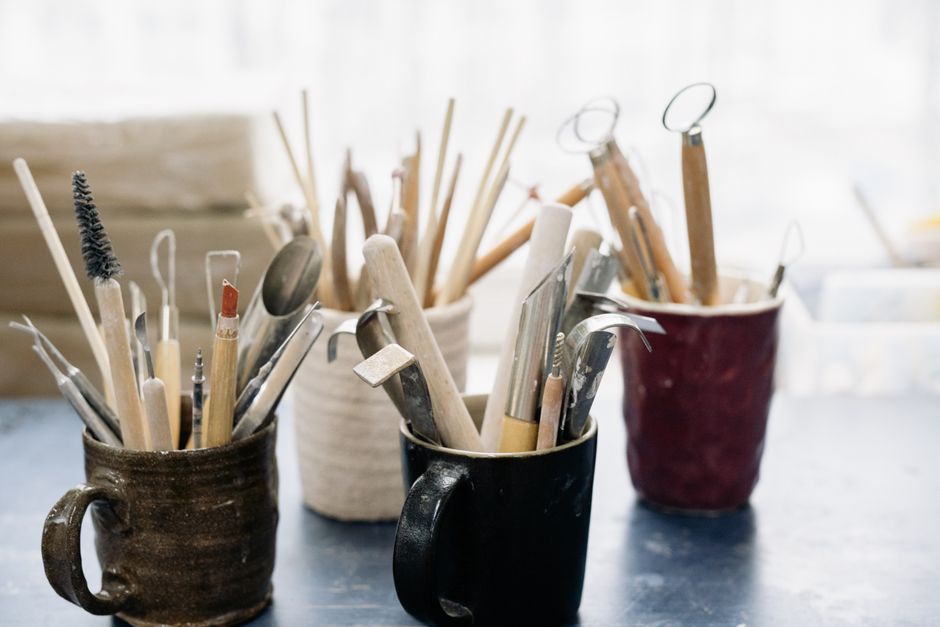
Weight is the thing nobody talks about when they talk about tools. Features get discussed endlessly — this brush holds more paint, this knife has a longer blade, this pen has a finer tip. But weight is the thing that determines whether a tool becomes part of your hand or stays a separate object you're operating.
The palette knife weighs almost nothing. That's the point. When you're mixing paint, you need to feel the resistance of the paint, not the weight of the tool. If the tool is too heavy, it masks the information coming back from the material. You stop feeling what the paint is doing and start feeling what the knife is doing. Those are different things.
I've been thinking about this because I've been trying out some new tools lately — brushes, mostly, but also some palette knives from a different manufacturer. The new knives are slightly heavier. Not much — maybe 20 grams. But I can feel the difference immediately. My hand has to compensate. The compensation is small, but it's there, and it means I'm spending a fraction of my attention on the tool instead of on the paint.
The handcraft tradition has always understood this. Old craftspeople talk about "breaking in" a tool — the period when you're learning the tool's particular qualities, its weight and balance and the way it responds to pressure. A broken-in tool is one that has become transparent. You stop noticing it. You only notice what it's doing to the material.
This is why I'm suspicious of tools that advertise features. Features are for people who haven't used the tool yet. Once you've used it enough, the features become irrelevant — what matters is whether the tool has become part of your hand. A tool with fewer features but better weight and balance will serve you better than a feature-rich tool that never becomes transparent.
The creative culture around tools has been shifting. There's more attention to craft, to the physical experience of making, to the relationship between maker and material. People are talking about tools the way they used to talk about ingredients — not just what they do, but how they feel, how they age, how they change with use.
My palette knife has changed. The blade has a slight discoloration from years of contact with oil paint. The handle has absorbed some of that oil and feels slightly different from a new handle. These changes are not defects. They're the record of use. The tool has become specific to me in a way that a new tool isn't.
The maker mindset that I find most useful is the one that pays attention to this specificity. Not every tool needs to be broken in — some tools are meant to be disposable, and that's fine. But the tools you use every day, the ones that are central to your practice, deserve the time it takes to make them yours. That time is not wasted. It's the investment that makes the tool work.
Weight before features. That's the principle. When you're choosing a tool, hold it first. Feel how it sits in your hand. Feel how it moves. The features are secondary. The weight is primary. Your hand knows things your brain doesn't, and it will tell you whether this tool is going to become part of you or stay a separate object you're operating.
The made-in-California goods that I keep coming back to are the ones that got this right. Not the ones with the most features. The ones that feel right in the hand. That's the whole thing, really. Everything else follows from that.